Introduction
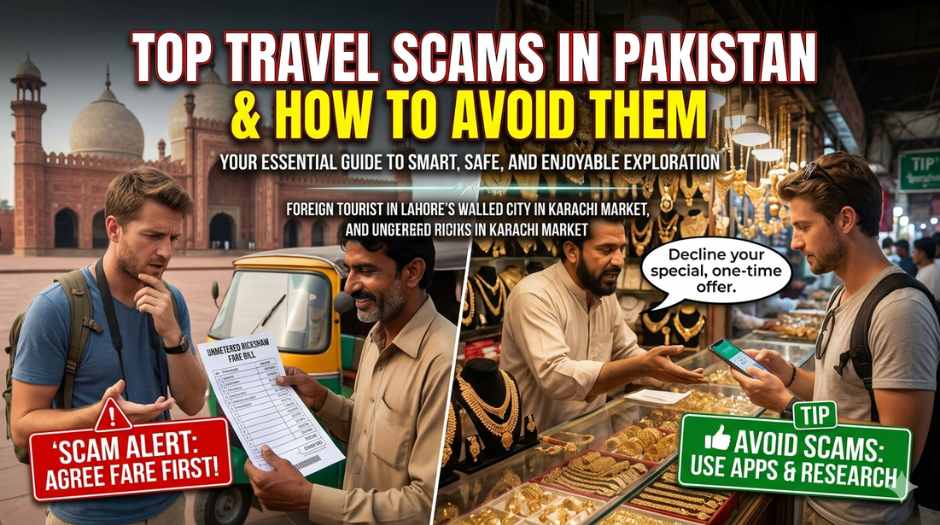
Top Travel Scams in Pakistan and How to Avoid Them
Pakistan is one of the most beautiful and underrated travel destinations in the world. From the majestic mountains of Hunza Valley to the busy streets of Lahore and the beaches of Karachi, the country offers unforgettable travel experiences.
Most locals are welcoming and hospitable, but like every tourist destination in the world, travelers can sometimes encounter scams. These scams usually target tourists who are unfamiliar with local prices, routes, or travel systems.
The good news is that most travel scams in Pakistan are easy to avoid if you stay informed and alert.
This guide covers the top travel scams in Pakistan and practical tips to protect yourself while traveling.
🚕 1. Overpriced Taxi and Rickshaw Fares
One of the most common scams in Pakistan involves taxi drivers or rickshaw operators charging tourists excessively high fares.
This usually happens in:
- Airports
- Bus terminals
- Tourist markets
- Railway stations
Some drivers may claim:
- “The road is closed.”
- “Petrol prices increased.”
- “Tourist rates are different.”
How to Avoid It
- Use ride apps whenever possible
- Confirm fare before starting the ride
- Ask locals about normal prices
- Carry small cash notes
Apps like:
- Careem
- inDrive
can help avoid overcharging.
🏨 2. Fake Hotel Bookings
During peak tourism season, some fake travel agents or unofficial pages advertise cheap hotels and ask for advance payments.
After payment:
- The hotel booking may not exist
- The hotel may be completely different
- The scammer disappears
This is common in tourist areas like:
- Hunza Valley
- Skardu
- Naran
How to Avoid It
- Book through trusted platforms
- Call the hotel directly before payment
- Check Google reviews and location
- Avoid sending full advance payments to unknown agents
🧭 3. Fake Tour Guides
In tourist spots, some people pretend to be professional guides and offer:
- Cheap tours
- Adventure trips
- Shortcuts to attractions
In reality, they may:
- Overcharge later
- Provide false information
- Take travelers to expensive shops for commissions
How to Avoid It
- Hire licensed guides only
- Ask hotels for verified recommendations
- Check reviews online
- Avoid random street offers
💸 4. Currency Exchange Scams
Tourists exchanging foreign currency may sometimes receive:
- Incorrect rates
- Fake notes
- Hidden fees
This can happen in unofficial exchange shops.
How to Avoid It
- Exchange money at authorized exchange companies
- Count cash carefully
- Avoid street currency dealers
- Check current exchange rates online beforehand
🛍️ 5. Tourist Price Inflation
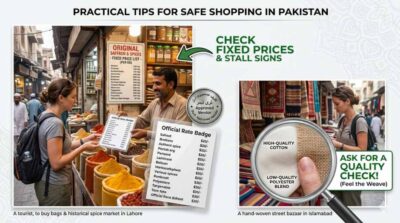
At tourist markets, shopkeepers may quote extremely high prices after identifying someone as a tourist.
Common items include:
- Handicrafts
- Shawls
- Gems and stones
- Traditional caps and souvenirs
How to Avoid It
- Compare prices at multiple shops
- Bargain politely
- Ask locals about fair prices
- Avoid shopping immediately at first store
Negotiation is normal in many Pakistani markets.
🚐 6. Fake “Direct” Transport Services
Some transport operators claim they provide:
- Direct routes
- Luxury buses
- VIP services
But travelers may end up:
- Changing vehicles multiple times
- Sitting in overcrowded vans
- Paying extra hidden charges
How to Avoid It
- Use trusted transport companies
- Buy tickets from official counters
- Confirm route details beforehand
Reliable companies include:
🏔️ 7. Jeep Overcharging in Northern Areas
In places like:
- Fairy Meadows
- Deosai National Park
- Ratti Gali Lake
local jeep drivers may charge tourists much higher prices.
Sometimes travelers are told:
- “Only one jeep is available”
- “Road conditions are dangerous”
- “Special permit fees apply”
How to Avoid It
- Share jeeps with groups
- Ask multiple drivers for prices
- Check rates online or with locals
- Negotiate before starting the trip
📱 8. SIM Card and Internet Scams
At airports or tourist areas, some unofficial vendors sell:
- Expensive SIM cards
- Already-used SIMs
- Fake tourist packages
How to Avoid It
Buy SIM cards only from official franchises of:
Always verify package details before payment.
🍽️ 9. Restaurant Bill Manipulation
In crowded tourist areas, some restaurants may:
- Add extra items to bills
- Charge “service fees” without informing customers
- Increase menu prices verbally
How to Avoid It
- Check menu prices before ordering
- Ask for printed bills
- Review bills carefully before paying
This issue mostly occurs in heavily touristy locations.
📸 10. “Free Photo” or Animal Scams
At tourist sites, some people may offer:
- Free photos with animals
- Traditional dress photography
- Falcon or horse pictures
After the photo, they demand large payments.
How to Avoid It
- Ask price beforehand
- Avoid unclear offers
- Politely refuse if uncomfortable
🚨 General Safety Tips for Travelers in Pakistan
✔️ Stay Alert in Crowded Areas
Keep valuables secure in markets and bus terminals.
✔️ Avoid Flashing Expensive Items
Luxury cameras, jewelry, and large amounts of cash can attract scammers.
✔️ Research Before Traveling
Knowing local prices and routes helps avoid fraud.
✔️ Trust Verified Sources
Book transport, hotels, and tours through trusted companies or platforms.
✔️ Keep Emergency Contacts
Save hotel numbers, local police, and transport contacts.
🌟 Is Pakistan Safe for Travelers?
Yes. Pakistan is generally safe and welcoming for tourists. Most travelers have positive experiences and often praise the hospitality of local people.
The majority of scams are minor financial tricks rather than serious crimes. By staying informed and cautious, travelers can easily avoid problems and enjoy a memorable trip.
Conclusion
Traveling through Pakistan can be an incredible experience filled with mountains, culture, history, and adventure. While travel scams do exist, most are easy to avoid with basic awareness and preparation.
Whether you’re exploring Hunza Valley, shopping in Lahore, or road-tripping through the Karakoram Highway, staying informed will help you travel confidently and safely.
Smart travelers enjoy Pakistan without problems—and with unforgettable memories.
Table of Contents
Toggle